


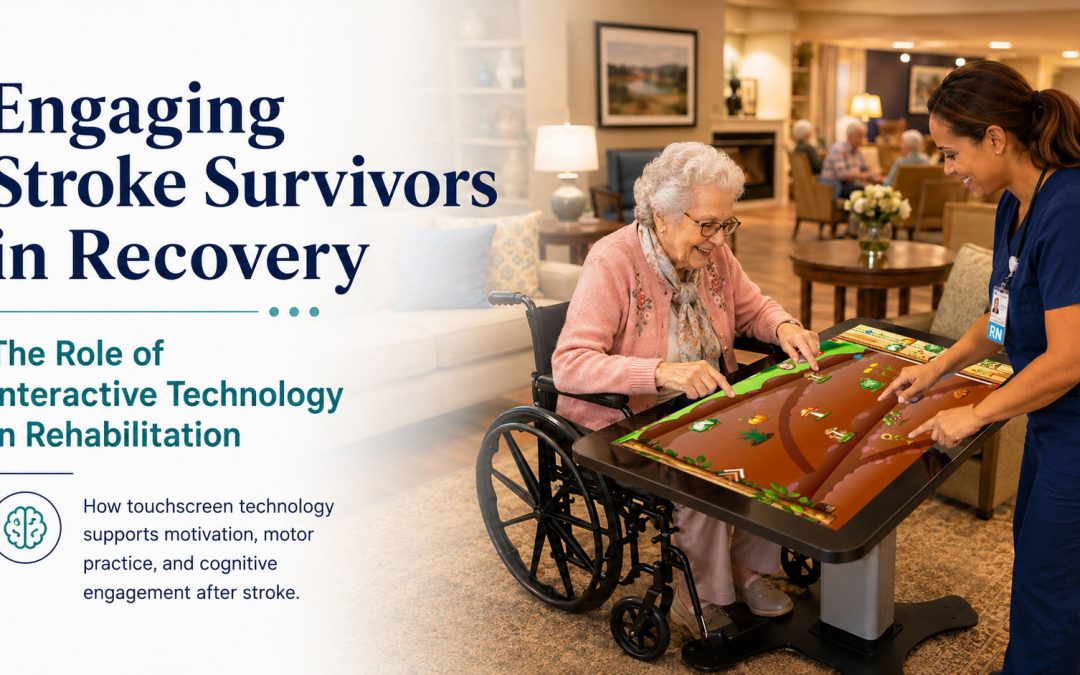
The Recovery Challenge After Stroke
Stroke recovery is an extended, effortful process that demands sustained motivation from patients. Rehabilitation protocols are most effective when they are practiced consistently — but the repetitive nature of therapeutic exercises, combined with the emotional weight of adjusting to post-stroke limitations, can undermine patient motivation and adherence.
Finding ways to keep stroke survivors engaged, motivated, and cognitively active throughout their recovery is one of the most important challenges in rehabilitation medicine.
Interactive Technology in Stroke Rehabilitation
Interactive technology offers something that traditional rehabilitation tools often struggle to provide: genuine engagement. When a stroke survivor is playing a game rather than performing an exercise, the experience of effort changes. The goal is external (complete the game, beat the score), which naturally recruits focus and persistence that the internal goal of ‘do this exercise’ often doesn’t.
This isn’t trivial. In rehabilitation research, motivation is one of the strongest predictors of outcome. Interventions that increase intrinsic motivation during recovery lead to more practice, more neural plasticity, and better functional outcomes.
How Touch2Play Supports Stroke Recovery Goals
Upper Extremity Rehabilitation
Touchscreen interaction requires directed upper extremity movement — arm reaching, hand positioning, and finger contact — that can be specifically valuable for stroke survivors working on upper limb function. The interactive nature of the activity provides immediate feedback for each movement, reinforcing the neural pathways being targeted in formal therapy.
Cognitive Engagement
Cognitive symptoms following stroke — including attention deficits, processing speed reductions, and memory difficulties — are common and significantly affect quality of life. Games that require attention, quick responses, and working memory provide gentle cognitive exercise in an engaging format that doesn’t feel clinical.
Social and Emotional Well-Being
Depression and social withdrawal are significant risks following stroke. Touch2Play in hospital and inpatient rehabilitation common areas provides a reason for survivors to gather, interact, and compete socially — supporting the psychological dimensions of recovery that clinical treatment alone doesn’t address.
Implementation in Inpatient and Outpatient Settings
Touch2Play is used in inpatient rehabilitation units, stroke specialty care floors, and outpatient rehabilitation waiting areas. The large-format touchscreen and height adjustable table option accommodate patients in wheelchairs or with mobility equipment. Setup requires no IT infrastructure. Contact Touch2Play to discuss how the system fits your rehabilitation environment.