


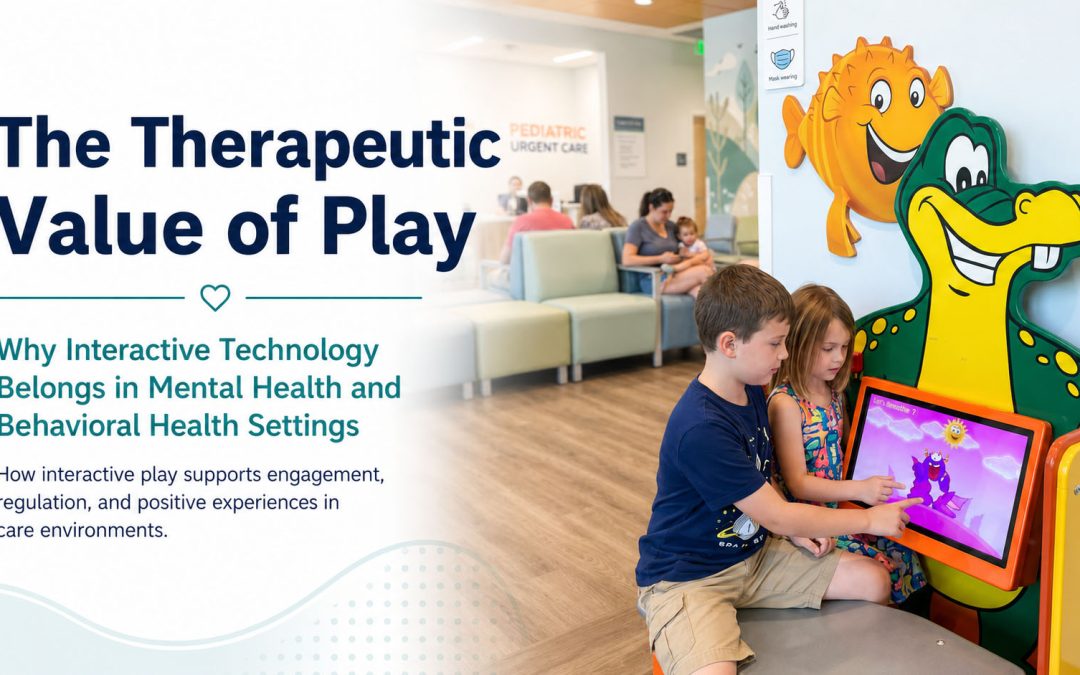
Play Is Not Trivial in Mental Health Settings
In mental health and behavioral health settings, engagement is both a therapeutic tool and an operational necessity. Patients and clients who are waiting for appointments, between group sessions, or in inpatient settings need meaningful activity that supports their well-being, reduces agitation, and builds the kind of small positive experiences that counteract the negativity that often characterizes mental health crises.
Play — purposeful, engaging, non-threatening activity — has a legitimate role in mental health settings. The evidence is not new: play therapy for children, recreational therapy for adults, and activity-based interventions across diagnoses are well-established components of behavioral health treatment.
The Challenge of Engagement in Behavioral Health
Mental health and behavioral health settings face specific engagement challenges. Patients may be withdrawn, in crisis, experiencing side effects of medication, or resistant to structured programming. Stigma around recreational activity in serious psychiatric settings can lead administrators to underinvest in engagement programming. And security and safety requirements limit the technology and materials that can be used in inpatient environments.
Touch2Play addresses each of these challenges. The system is non-threatening and intuitive — it doesn’t require explanation or instruction that can feel clinical or condescending. It’s available without staff facilitation, meaning withdrawn patients can engage at their own pace and on their own initiative. And its offline, no internet connection required for gameplay, fixed-content design addresses security requirements without the internet access risks associated with general-purpose devices.
Applications Across Settings
Outpatient Waiting Rooms
Mental health clinic waiting rooms are often anxiety-provoking environments — clients may be there for their first appointment, dealing with insurance or access challenges, or in significant distress. A Touch2Play system in a waiting room provides engagement that reduces perceived wait time and gives distressed clients something to focus on other than their anxiety.
Inpatient Behavioral Health Units
Inpatient psychiatric units with common room Touch2Play systems have observed that the technology provides a structured, positive activity option during unstructured periods — one that doesn’t require staff facilitation and that multiple patients can engage with simultaneously or sequentially.
Residential Treatment Programs
Residential programs for adolescents, adults with serious mental illness, and substance use recovery clients benefit from Touch2Play as a recreational option that is safe, engaging, and socially connective. Group use of the system can build community and provide a healthy shared activity.
What to Look for in Behavioral Health Technology
Safe, with no components that can be detached or misused. Easy to clean and disinfect. Offline and non-internet-connected. Accessible to clients with significant cognitive or motor challenges. Touch2Play meets these requirements. Contact us to discuss appropriate configurations for your behavioral health environment.