


What ‘The Best’ Actually Means in Classroom Technology
Every year, technology vendors make bold claims about transforming education. The reality of classroom technology procurement is more grounded: decision-makers — curriculum directors, technology coordinators, principals, and department heads — need equipment that works reliably, serves a diverse range of learners, doesn’t require constant IT intervention, and delivers measurable value.
Here’s how to think about what actually belongs in modern learning spaces.
Criteria That Matter When Evaluating Classroom Technology
Durability and Reliability
Commercial-grade equipment designed for high-use, high-traffic environments consistently outperforms consumer technology in school settings. The calculation is simple: the total cost of ownership of durable equipment is lower than the replacement and maintenance cost of consumer-grade alternatives that weren’t built for institutional use.
Accessibility
The best classroom technology serves every student — including those with physical disabilities, cognitive differences, and learning challenges. Equipment that requires complex navigation, fine motor precision, or prior tech experience creates barriers rather than removing them. Touchscreen systems with large, responsive interfaces are among the most accessible options available.
Ease of Implementation
Teacher buy-in depends on ease of use. Technology that requires significant professional development, technical setup, or ongoing IT management struggles to achieve consistent classroom deployment. The best classroom technology is genuinely intuitive for both teachers and students.
Offline Functionality
School network reliability varies dramatically between districts and buildings. Technology that depends entirely on internet connectivity is vulnerable to outages, bandwidth constraints, and security policy changes. Offline-capable systems provide consistent value regardless of network conditions.
Where Touch2Play Fits in the Classroom Technology Ecosystem
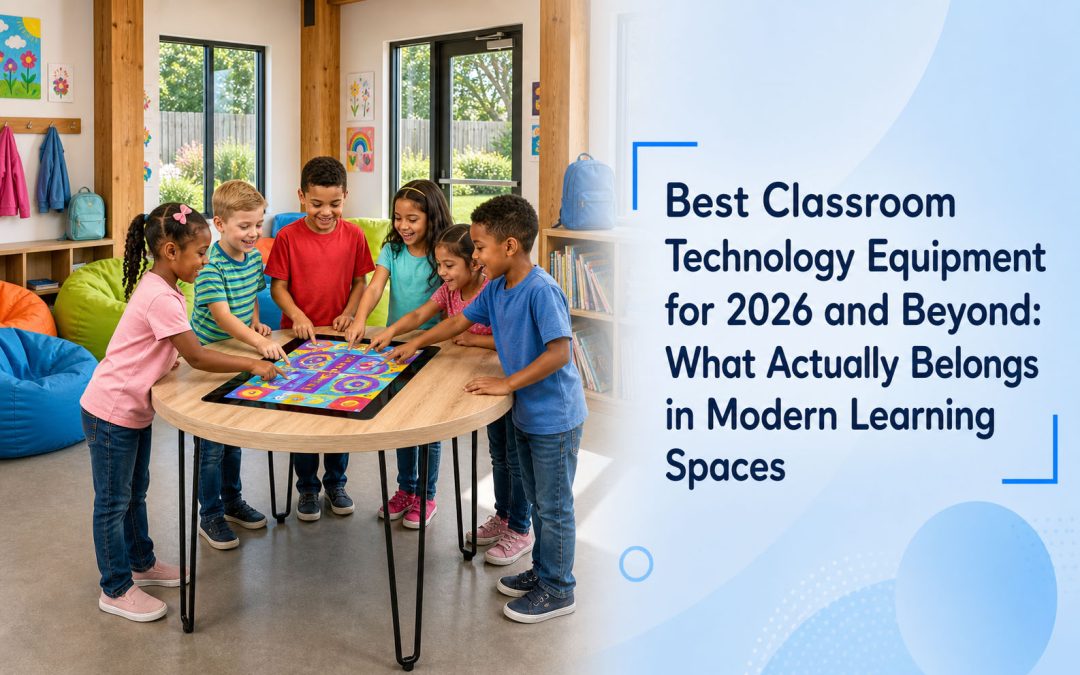
Touch2Play is not a replacement for core instructional technology. It is a complement — particularly valuable in specific contexts: special education and resource rooms, sensory spaces and calm-down corners, break rooms and enrichment stations, early childhood learning centers, and library makerspace areas.
In these contexts, Touch2Play’s commercial-grade durability, offline operation, accessibility, and content library make it one of the most practical options available. It requires no teacher facilitation to operate, which means it delivers value without consuming instructional time.
Building a Technology Ecosystem That Works
The most effective school technology programs don’t chase the latest innovation — they build coherent ecosystems where each tool serves a specific, defined purpose and is matched to the context where it will perform best. Interactive touchscreen systems, digital whiteboards, student devices, and specialized tools like Touch2Play each have their role.
If you’re evaluating classroom technology equipment and want to understand where interactive touchscreen systems fit in your specific environment, Touch2Play would welcome the conversation.